
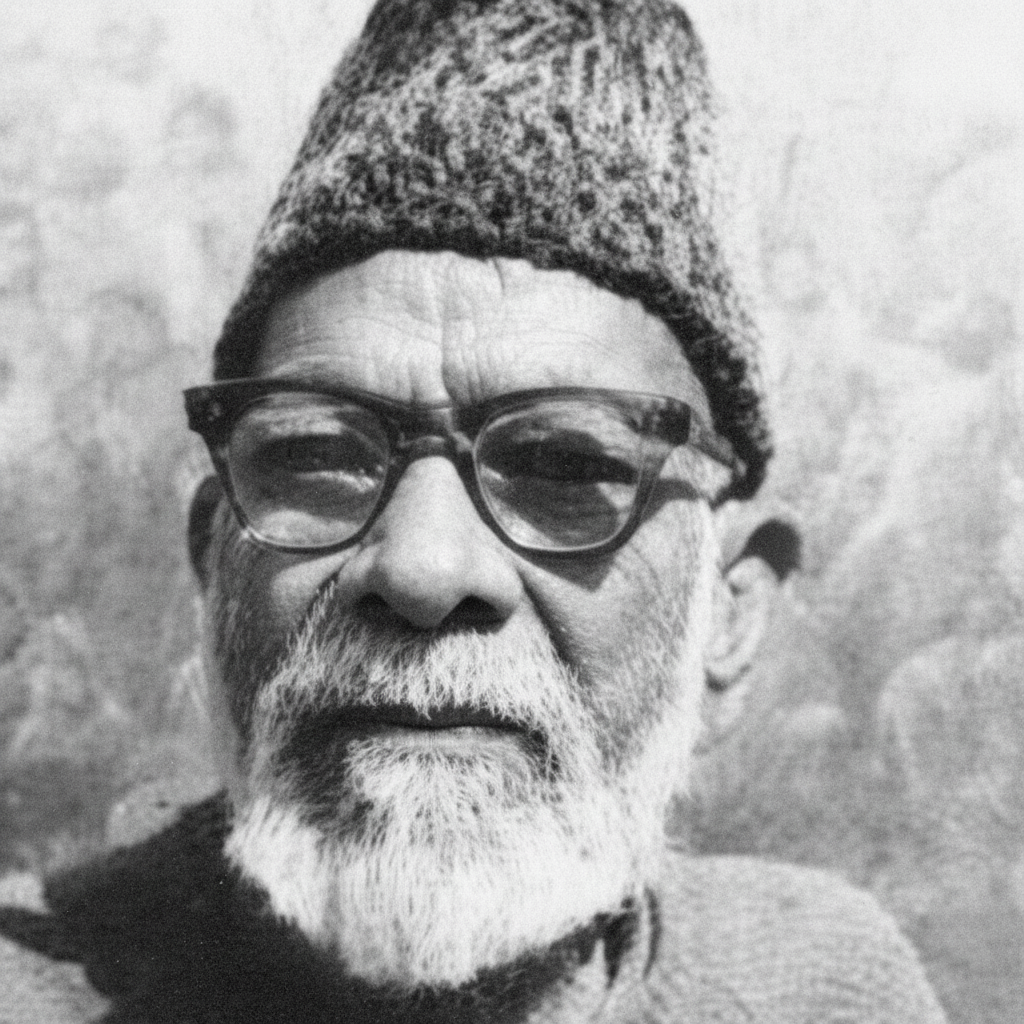
Ustad Allah Bux stands among the most celebrated pioneers of early modern painting in the Indo-Pak subcontinent. Revered for his evocative portrayals of rural life and cultural narratives, he remains one of the most important artists to have visually documented the spirit and traditions of Punjab. Born in Wazirabad, Punjab, in 1895, Allah Bakhsh developed a remarkable artistic sensitivity from an early age, later transforming everyday scenes of village life into timeless works of art that continue to define the visual memory of the region.
His paintings are widely recognized for their lifelike scale, vibrant palette, and masterful storytelling. Through scenes of farmers, village festivities, folklore, and mythological subjects drawn from Hindu and Persian traditions, Allah Bakhsh created a visual archive of South Asian cultural life. His compositions capture not only the physical landscape of rural Punjab but also the emotional and social rhythms of the people who inhabited it. The warmth, movement, and authenticity in his works invite viewers into a world where tradition, labor, and celebration coexist harmoniously.
Allah Bakhsh began his artistic training at an exceptionally young age under the guidance of Master Abdullah, a distinguished painter and master of miniature art. By the age of fourteen, he had already begun developing an independent artistic identity. He further refined his skills under Master Meeran Bakhsh Naqash, a renowned artist and Vice Principal of the Mayo School of Arts (now the National College of Arts, Lahore), where he deepened his understanding of classical technique and composition.
Today, Ustad Allah Bakhsh’s legacy is preserved through important institutional and private collections. His works are held in the National Art Gallery of Pakistan, where a dedicated section honors his contribution to the artistic heritage of the region. In addition, Hamail Art Gallery, Lahore, houses an important collection of original works by Ustad Allah Bakhsh, representing different phases of his artistic journey and offering collectors and scholars a rare opportunity to engage with the master’s celebrated depictions of rural culture.
Ustad Allah Bakhsh passed away in October 1978 and was laid to rest in Muslim Town Graveyard, Lahore, where his legacy continues to be remembered by generations of artists, historians, and collectors. His former studio was later transformed into the Allah Bux Academy, serving as a center for artistic learning and preserving the stylistic traditions associated with this great master.
Today, his paintings remain highly valued in the international art market and are considered essential to any serious collection of South Asian art. Through his profound ability to translate the vitality of rural life onto canvas, Ustad Allah Bakhsh secured a permanent place in the history of Pakistani art as a master storyteller of the land and its people.